

By WiNG – Own work, CC BY-SA 3.0
One of the things that makes horse racing great is that it is a global sport. Yes, it’s mostly dominated by Western countries, but that doesn’t mean that there is no horse racing in Asia.
Yes, our minds immediately shift to the Kentucky Derby, Royal Ascot, or maybe some other big races in France or Australia, but there are a couple of countries in Asia where horse racing is thriving.
And not in a small way either. Asian markets are now one of the biggest forces shaping how horse racing is covered, broadcast, and scheduled globally. They also have a long history with the sport that dates back centuries.
So, what exactly is going on there? Let’s take a deep dive into Asian horse racing markets and see which are the biggest players that move the sport forward.
It Starts With the Money (And It’s Not Even Close)
We can all agree that if there’s one thing that drives change in any sport, it’s money. And in horse racing, Asia has a lot of it.
Let’s take the Hong Kong Jockey Club as an example. We’re not talking about a local racing authority. This is one of the largest betting organizations in the world. In recent seasons, their annual betting turnover has exceeded HK$140 billion (over $17 billion USD).
Well, that’s not a niche market for sure.
Let’s put it into context and compare it with the US horse racing betting market. In the US, some of the most popular online betting websites, like TwinSpires.com, generate around $15 billion, which means that the Hong Kong and US horse racing scenes are quite similar in terms of betting popularity.
But Hong Kong isn’t the only place in Asia that has a rich horse racing scene. We also have Japan, which is another huge player. The Japan Racing Association consistently records some of the biggest betting and coverage volumes in the entire region.
Coverage Is No Longer Built Only for Local Audiences
However, horse racing isn’t a local sport. In fact, we’re talking about a sport with hundreds of years of history that has spread globally all around the world, with main driving hubs like Japan, Hong Kong, India, and Dubai driving the growth in the Asia region.
Horse racing used to be covered mostly for local audiences. So, if you were watching races in the UK, the broadcast was tailored for UK viewers. The same goes for the US, Australia, and so on.
But that doesn’t work anymore. Why?
Well, because a huge portion of the betting audience is now international, especially in Asia.
This means that broadcasters have to adapt. If your main audience is international, there is no point in pushing local broadcasts. That way, you’ll lose betting interest and lose money.
That’s why race times are sometimes adjusted to fit Asian time zones. Commentary becomes more natural and globally accessible. And the graphics, odds, and data are displayed in ways that make sense to the wider audience.
This means that most of these countries (although Japan struggles with this, to be honest) are now tuned for a global audience, and their coverage is made in a way to make the sport suitable for the wider audience.
Hong Kong Changed the Way Racing Is Produced
If you’ve ever watched races from Hong Kong, you’ll notice something immediately.
The production quality is different.
Cleaner visuals. More data. Better camera angles. More structured analysis.
And that’s not accidental.
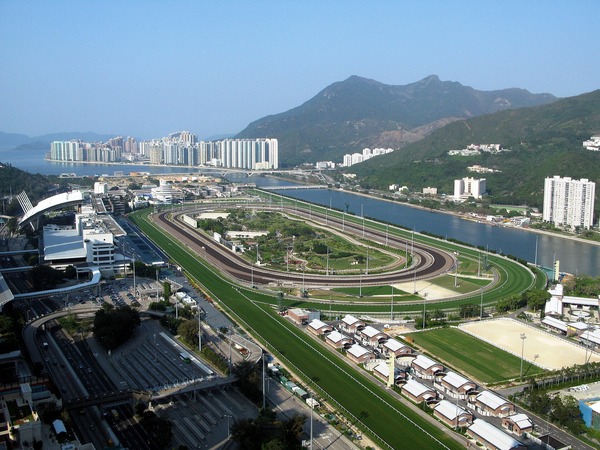
The Happy Valley Racecourse and Sha Tin Racecourse are known for some of the most advanced race broadcasting setups in the world.
They’ve invested heavily in:
- real-time tracking
- detailed race analytics
- high-quality broadcast production
And because Hong Kong racing attracts a global betting audience, that level of production has become a benchmark.
Other racing organizations are now trying to match it.
Japan Turned Horse Racing Into a Media Product
Japan took a slightly different approach.
Instead of focusing only on betting, they turned horse racing into something closer to mainstream entertainment.
Major races like the Japan Cup or the Arima Kinen draw huge TV audiences. We’re talking millions of viewers, not just hardcore fans.
However, we all know that the coverage isn’t just about the race. It also includes storytelling, horse profiles, betting analysis, jockey narratives, talking about the odds, and a detailed build-up that makes every single event feel bigger than just a betting opportunity.
And this has changed how other regions cover some of their biggest races. So, for so long, the region has focused solely on betting, which is the most important part of the sport. However, people now demand more. They want to be totally infused in the sport. They like the story behind every race, and all of these things impact the user behavior and make it more exciting.
The Rise of Simulcasting and Global Feeds
This is another relatively new thing that came from Asian markets. We’re talking about simulcasting.
What does that mean? Well, it’s basically races happening in one country that are broadcast live in another, often with integrated betting options. This has been quite popular in Hong Kong and Japan, where bettors frequently follow races like the Royal Ascot, the Epsom Derby, and the Triple Crown races in the United States.
But now, it works both ways. Western racing organizations now distribute their races globally, knowing there’s a large Asian audience watching and betting. This is basically a huge win for us, the fans, since we get to watch more races.
So, horse racing hasn’t changed at its core. It’s still the same sport we got hooked on centuries ago. But everything around that moment is evolving, and this is good for both the fans and the sport.